Playing together
Playing with your kid doesn't need to become a whole lesson.
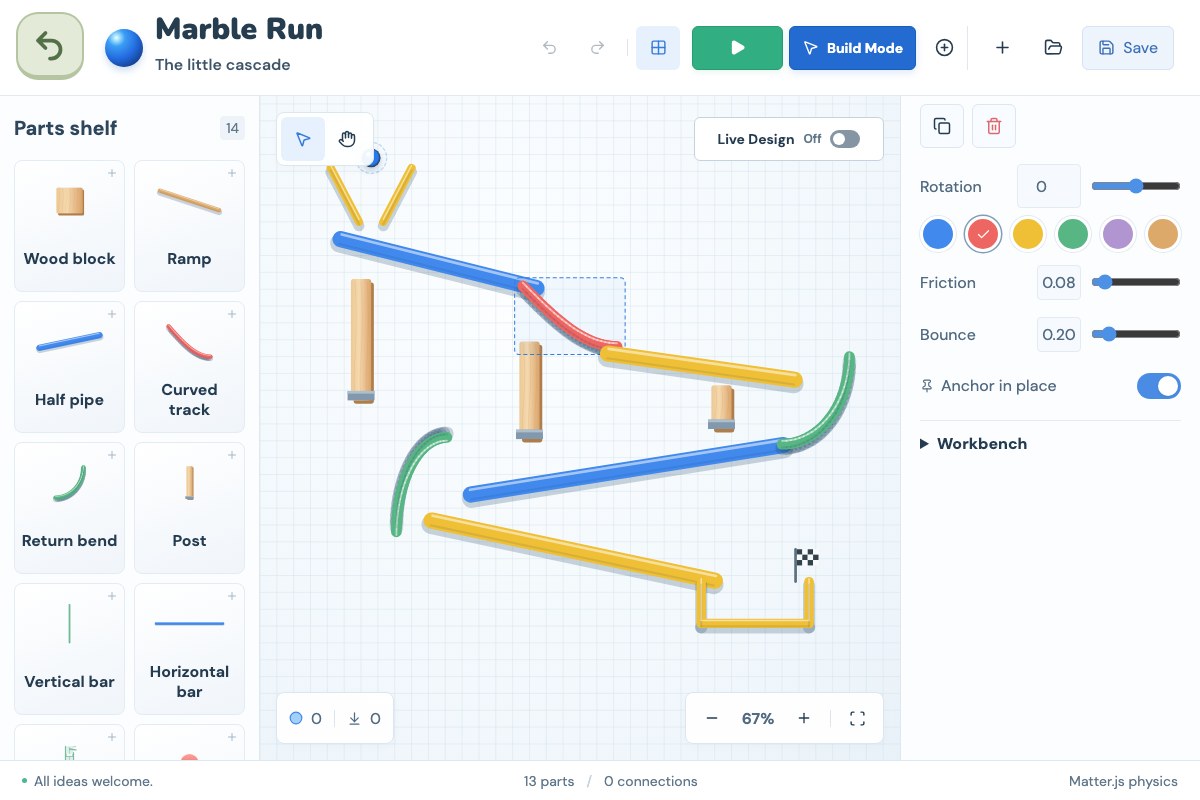
Can we take the pressure off a bit? You don't need to narrate every move or turn a marble game into a science lesson. Sitting beside your kid and being interested is a perfectly decent place to start.
Pick one game. Not a whole evening's project.
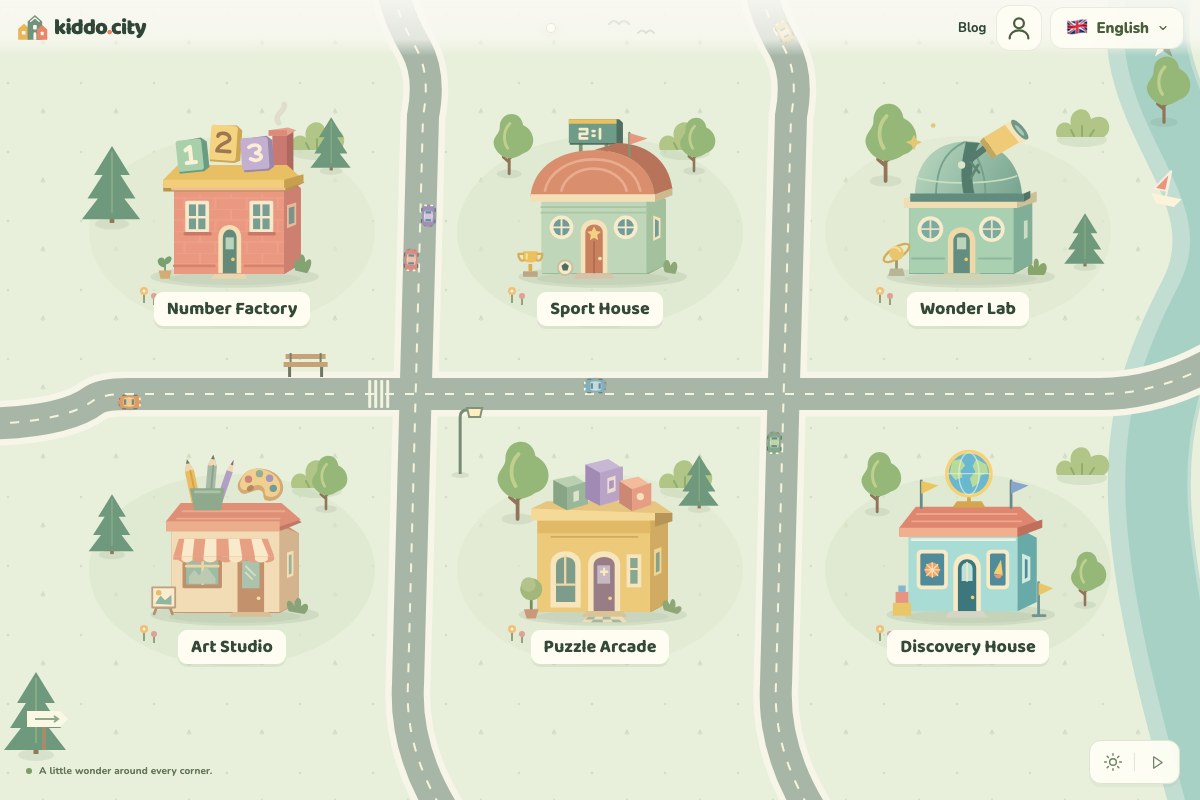
A drawing or a puzzle? Let them choose. If the whole map is too much, offer two things. You're getting started, not designing a curriculum.
Agree an ending before you start. One picture, one track to test, or a time that fits your routine. Finishing a game matters less than dinner, sleep, or a kid who's had enough.
Ask less. Actually listen.
'What do you reckon happens if we move that?' is a decent question. 'Which learning objective have you achieved?' probably isn't the vibe. Give them time, and let 'dunno' count as an answer.
You can also just watch quietly. No need to correct every turn or grab the controls at the first wobble. Help when they ask, or when it stops being fun. And if they'd like to stop, that's allowed.
Maybe the game carries on without the screen
A track on screen might become a cardboard-tube ramp with an age-appropriate ball. A drawing might carry on with pencils. Or neither happens, because everyone wants a snack. These are invitations, not extra homework.
Keep materials suitable for your child's age and supervise. Small marbles and loose parts can be choking hazards for young children. You don't need to copy the game exactly to try an idea together.
A laugh counts. So does calling it a day.
You might notice, 'You changed that bend and tried again.' Or just ask if they liked it. No scorecard, no comparison with someone else's kid.
Maybe you finish the puzzle. Maybe you laugh at a track that doesn't work and go outside. Kiddo.city can offer an activity. It doesn't get to decide what a good moment with your child looks like.